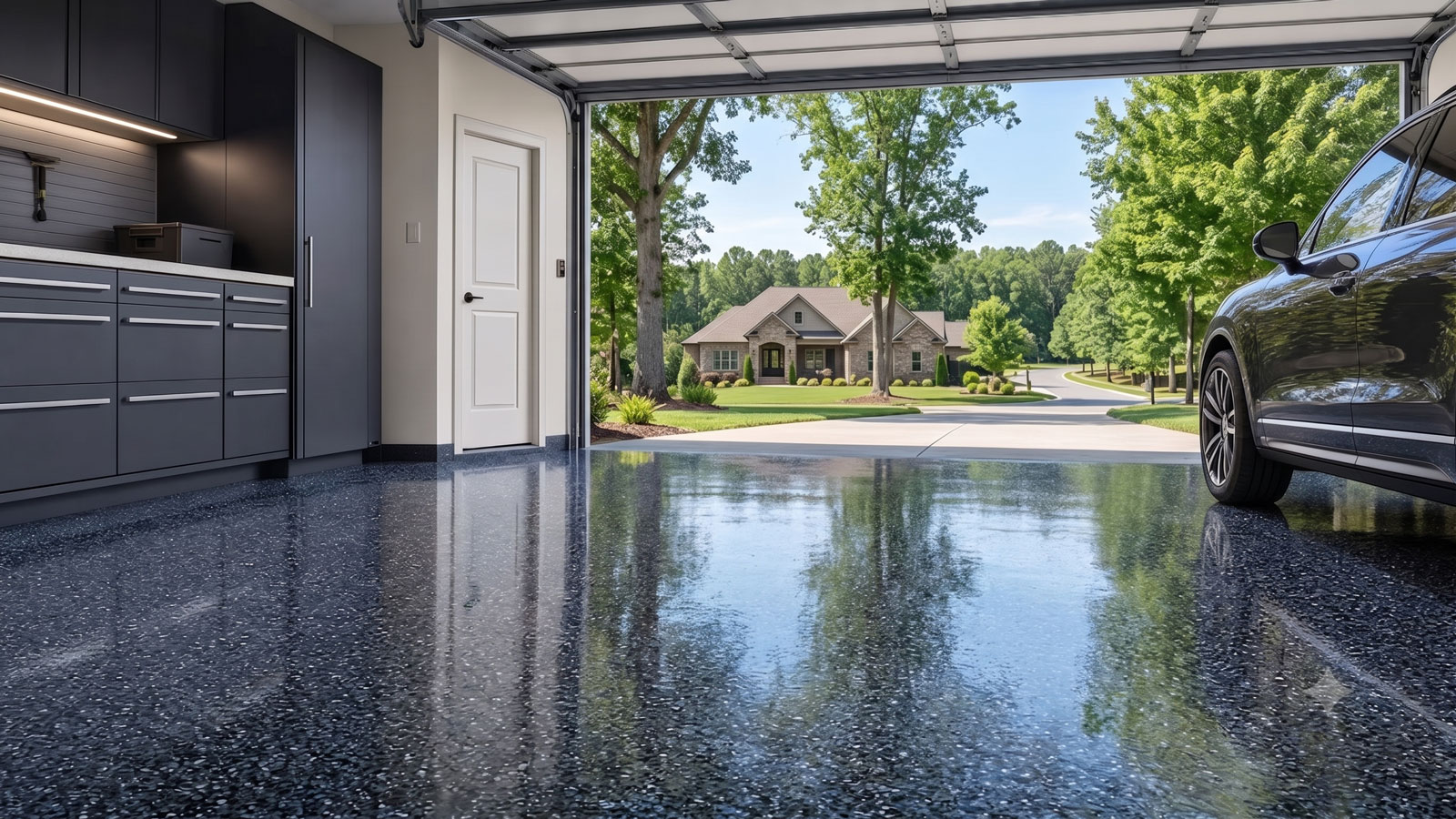
Garage Floor Coating in Blacksburg, VA
Floor Coating Services in Blacksburg, VA
Blacksburg is a major New River Valley community west of Roanoke and home to Virginia Tech. Its residential environment includes established homes, newer housing, and garages that serve everyday vehicle, storage, workshop, and outdoor-gear needs. Blacksburg anchors the western New River Valley portion of the territory, linking a university-centered community with a broader Southwest Virginia residential and commercial landscape.
The New River Valley relationship is useful when planning a garage floor project because the same regional issues still matter: seasonal moisture, wet-road tracking, winter snow and snowmelt, and temperature variation in unheated spaces. Sunlight through open doors and hot tires can also affect product discussions. Compare not just product names but the complete surface preparation, repair scope, traction, cleanup instructions, and parking downtime.
A professional coating project starts below the finished surface. Concrete should be assessed for cracks, stains, old coatings, and moisture concerns, then mechanically prepared so the selected epoxy or polyaspartic system has a sound substrate. An inspection should also cover the garage-door edge, prior sealers, and the routes used to move vehicles and belongings out during curing. The installation schedule should accommodate access around storage, wet-shoe traction needs, and the manufacturer's documented cure window.
Regional Context
Blacksburg anchors the western New River Valley portion of the territory, linking a university-centered community with a broader Southwest Virginia residential and commercial landscape.
What Affects the Cost of Garage Floor Coating in Blacksburg?
A Blacksburg garage-floor quote should be based on measured area and real slab condition. Blacksburg is a New River Valley university town. That geography is useful context but does not show that a particular concrete floor is wet or cracked. Inspect old paint, sealers, repairs and driveway access before deciding on preparation.
For residential garages serving winter vehicles and storage, surface profiling, edges and access around stored belongings can change labor. Ask about specific crack treatment, finish texture, coating layers and curing time as distinct parts of the written estimate.
- Concrete history: An existing house may have a later replacement slab or old paint. Identify coatings and repairs actually present rather than infer concrete age or suitability from the neighborhood.
- Runoff and grading: Blacksburg is a New River Valley university town. That does not diagnose a garage. Check rainwater at the threshold, driveway slope, roof drainage and any recurring dampness before selecting a coating.
- Road grit: Montgomery County has its own local and state roadway context. Winter vehicle grit can be carried into a garage, but actual contamination must be observed before selecting cleaning and grinding methods.
- Cracks and joints: Patching, surface spalls and active joints require an appropriate plan. A cosmetic finish cannot stop structural movement or solve ongoing deterioration.
- Steps and access: Storage fixtures, drains, wall edges and tight equipment access change scope beyond square footage. Ask which belongings must be moved and how corners will be prepared.
- Finish and reopening: Flake coverage, traction, curing conditions and the topcoat affect pricing. For residential garages serving winter vehicles and storage, agree on alternate parking and when tires may safely return.
Call for a clear, project-specific estimate — or request one online.
Blacksburg Terrain, Runoff and Garage Moisture
Blacksburg is a New River Valley university town. Montgomery County has its own local and state roadway context. These facts distinguish this service area within western Virginia, but no geographic description or public road plan determines the moisture content of private concrete. Homeowners should examine where rainwater travels on their own driveway, especially near the garage apron and exterior door.
A puddle from a wet vehicle differs from storm runoff crossing the threshold or moisture that remains long after cars have left. Check drainage patterns during rain, the condition of the door seal and whether old floor paint has blistered. If persistent dampness or active water entry exists, it may need testing or drainage correction before a resin finish can be installed.
A contractor should inspect oil staining, previous coatings, cracks, patched areas and concrete hardness. Grinding to the intended profile is central to bond quality. Local climate cannot replace direct slab assessment, and even an expensive topcoat will not prevent structural movement or reliably conceal an unresolved moisture source.
Planning a Garage Floor Coating in Blacksburg
With residential garages serving winter vehicles and storage, the garage may serve as everyday parking, a household entry or a place to store tools. Those uses affect texture, stain resistance expectations and how much space needs to be cleared before installers can begin. Quote floor edges, steps, storage zones and obstacles rather than using a simple rectangular calculation alone.
Building age is not a dependable proxy for garage slab age. Additions or later pours may have different repairs and surface treatments than an original driveway. An installer should document the actual concrete, explain old-coating removal and specify how movement joints or pits will be treated. This makes competitive bids easier to evaluate fairly.
Compare epoxy and polyaspartic as complete applied systems, including grinding, resin layers, flake broadcast and topcoat. Temperature and cure windows matter when a garage is needed for daily vehicles. Discuss wet-shoe traction, regular cleaning and a realistic vehicle-return schedule. A clearly itemized preparation plan is more useful than a general promise of durability.
- Check previous paint or sealer.
- Identify cracks and older patches.
- Observe driveway runoff during rain.
- Distinguish car puddles from ongoing dampness.
- Clear steps and perimeter access.
- Confirm manufacturer cure instructions.
Frequently Asked Questions
Does Blacksburg's terrain mean garage concrete is wet?
No. Blacksburg is a New River Valley university town. That local context does not establish water at a particular address. Check the driveway slope, door seal and actual slab symptoms before requesting moisture treatment or coating.
Can an older Blacksburg garage be coated?
Possibly. A garage slab can be newer than the home itself. Its concrete condition, previous finishes, contamination, cracks and moisture findings determine whether appropriate preparation can support a coating.
Will a coating fix drainage at my garage door?
No. Repeated runoff should be addressed by proper drainage and door maintenance. Water tracked in by a vehicle is different from water entering during rain or persistent moisture beneath concrete.
Is epoxy or polyaspartic best in Blacksburg?
Neither is always best. Preparation, coating-system details, surface texture, temperature and cure requirements affect suitability. A contractor should base the recommendation on an inspection of the actual garage floor.
What should a Blacksburg quote include?
Ask about grinding, removal of paint or sealers, necessary repairs, joints, topcoat texture, perimeter work and cure timing. Clarify where vehicles and belongings can be moved during the project.
Blacksburg Neighborhoods & Local Context
Phone Quote Line
Speak with a floor coating specialist about your project and get a realistic estimate range.
(540) 787-2211Typical Project Cost
$3,000–$5,500
Typical range for a two-car garage. Final pricing depends on floor size, concrete condition, prep work, coating type, and finish options.
Helpful Guides
Other Service Areas